Jan 26, 2026
Ad teams are in the weeds handling video requests. A single campaign across TikTok, Instagram, Meta and YouTube used to mean separate shoots, long edits, and format juggling. Budgets burned and launches slipped away.
The new generation of video ad creation systems changed the equation. You can produce platform-ready video ads in hours instead of weeks. Video dominates social engagement. In 2024, 91% of businesses used video as a marketing tool. Can your team meet that demand with manual production?
Key Takeaways
Speed to Market: Autonomous AI agents reduce video ad production time from weeks to just 2-4 hours.
Platform Optimization: Tailoring creative to specific platform cultures (TikTok vs. YouTube) can increase engagement by up to 50%.
The 3-Second Rule: The "hook" is the most critical element; leading with a problem or surprising stat outperforms brand logos.
Lower Costs: AI systems allow for unlimited creative variations at a fraction of the cost of traditional production.
Data-Driven Strategy: Automation should be paired with clear objectives and systematic testing to avoid "volume without variety."
How Autonomous AI Agents Create Video Ads at Scale
AdMove is a benchmark for autonomous video creation. It works as an agent that runs the full workflow: research, creative, launch, and optimization.
Here’s the flow:
Drop in your store URL. The AI sets brand guidelines and campaign objectives automatically.
It compares competitor ads, spots winning patterns, and designs platform-specific variations.
Formats come platform specific by default:
TikTok: vertical, quick hooks, trend-aware audio.
YouTube: horizontal with strong thumbnail frames.
Instagram Reels: fast cuts for mobile viewing.
Meta placements: versions tuned for Feed and Stories.
Brand assets stay consistent, with pacing, aspect ratios, and CTAs adapted per placement. You achieve consistency without forcing a single format everywhere.
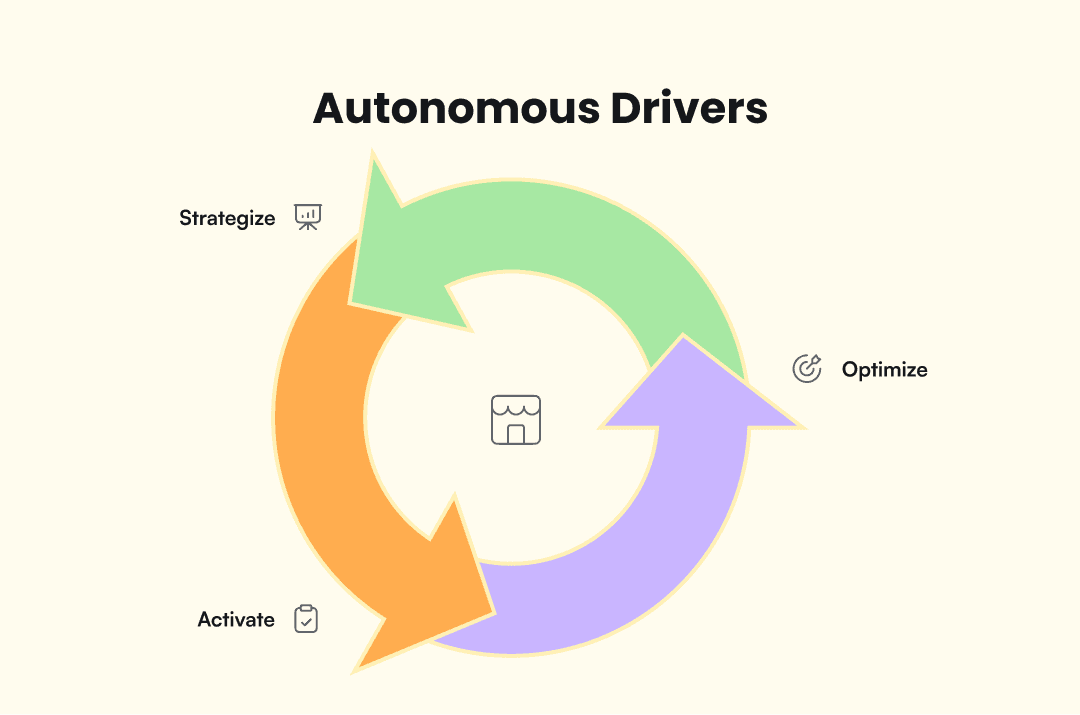
Three core functions drive the autonomy:
Strategize: builds a creative strategy from performance data
Activate: generates videos, writes platform copy, and sets campaigns
Optimize: reallocates budgets, and rotates creatives
Teams using AI systems report higher ROAS, a much faster setup, and meaningful weekly time savings on routine tasks.
What Traditional Production Costs You
The gap is not only noticeable in speed, but also in what you can ship with the same resources.
Production Method | Timeline | Cost Per Video | Variations Possible | Platform Optimization |
Traditional Production | 2-4 weeks | $2,000-$10,000 | 1-3 per campaign | Manual reformatting required |
Autonomous Systems | 2-4 hours | Included in subscription | Unlimited testing variations | Automatic for all platforms |
The timeline changes what’s possible. When a competitor launches a new offer, you can answer the same day. When a trend fits your product, you can ride it before it fades. Lower unit costs let you create platform-specific variations by forcing one master edit everywhere.
Essential Features That Actually Matter
Forget the feature lists in sales materials. These capabilities decide if a system helps or adds drag.
Autonomous Creative Generation
Top systems generate original videos. They learn patterns from high-performing ads in your category, then produce variations you can test at scale. You can isolate hooks, product demos, or CTAs and compare them cleanly.
Platform-Specific Optimization
Every platform has constraints and cultural norms. Good systems handle specs and style automatically.
Platform | Optimal Aspect Ratio | Duration Sweet Spot | Algorithm Priorities |
TikTok | 9:16 (vertical) | Under 60 seconds | Watch-through rate, re-watches |
Instagram Reels | 9:16 (vertical) | 30-60 seconds | Saves, shares, engagement |
YouTube | 16:9 (horizontal) | 15-60 seconds | Click-through rate, view duration |
Meta Feed | 1:1 or 4:5 | 15-30 seconds | Engagement, completion rate |
Modern video ad systems handle these specifications automatically. The same campaign message receives different executions designed for each platform's culture and user expectations. Campaigns using platform-specific creative typically see 30% to 50% higher engagement rates compared to repurposed content, according to data from Meta's business tools.
Real-Time Performance Integration
Direct API connections let the system spot winners and move budget automatically. It can identify which creative elements drive results, push spend to them, and test new variants against controls. Audience insights feed back into strategy, so you get a comprehensive learning report.
High-Volume Variant Generation
Modern systems batch-produce dozens of fresh versions from a single brief, giving you new hooks, layouts, and offers to test every week without extra design passes. That sustained variety keeps audiences engaged and algorithms learning.
Types of Video Ad Generation Systems
System Type | Best For | Key Limitation |
Autonomous Campaign Agents | Teams managing multiple campaigns across platforms | Requires clear strategic direction |
Template-Based Creators | Teams with established creative direction needing execution speed | Limited differentiation and testing volume |
Script-to-Video Generators | Teams with strong copywriting capabilities | Struggles with lifestyle content requiring human presence |
UGC-Style Generators | Brands targeting TikTok and Instagram with authentic content | Less effective for professional services or luxury brands |
What High-Performing Video Ads Contain
Understanding which creative elements drive performance helps you generate better content, regardless of which system you use.
The Hook Matters More Than Everything Else
Your first three seconds determine whether anyone watches the rest. The most effective hooks follow specific patterns that autonomous systems can replicate at scale.
Hook Type | When It Works Best | Example |
Problem Statement | Direct response, problem-aware audiences | "Spending 10 hours a week on campaign setup?" |
Surprising Stat | Awareness campaigns, data-driven categories | "91% of your competitors are using video ads" |
Direct Question | Consideration stage, specific use cases | "What if you could launch campaigns in 2 hours?" |
Visual Pattern Interrupt | TikTok, Instagram, entertainment categories | Unexpected visual or quick scene change |
Avoid logos and intros up front. Lead with relevance.
One Message per Video
Pick one idea and support it with a demo, proof, or offer. If you have more to say, make more videos. Generation speed makes this practical.
CTAs That Drive Clicks.
Generic CTAs underperform compared to specific, benefit-driven language:
Weak: "Learn More" or "Click Here"
Strong: "Start creating campaigns in under 4 hours"
Strong: "Try it today and save 10 hours this week"
Practices That Move The Needle
Practice | Why It Matters | Common Mistake |
Define clear campaign objectives first | Guides the entire generation process and platform selection | Creating content before establishing goals |
Segment audiences before creating | Specific content outperforms generic content | One campaign targeting everyone |
Front-load value in the first 3 seconds | Determines whether anyone watches the rest | Leading with branding or context-setting |
Maintain message simplicity | One clear idea creates clarity and memorability | Cramming multiple messages into one video |
Test systematically | Reveals what actually drives performance | Random testing that produces noise instead of insights |
Respect platform culture | Native-feeling content performs better | Using the same format across all platforms |
Set success metrics by funnel stage. Awareness cares about reach and watch-through. Conversion cares about clear value props and decisive CTAs. Test one variable at a time and log results in a simple tracker so learnings compound.
Common Pitfalls That Kill Results
Over-Automation Without Strategy
Autonomy needs direction. Define objectives, audiences, and success metrics. Review direction on a set cadence.
Volume Without Variety
Do not ship dozens of near-duplicates. Create real variation in hooks, mid-roll structures, CTAs, and visual styles. Use frequency caps to manage fatigue.
Insufficient Testing Duration
Do not call winners on tiny samples. As a floor, target at least 1000 impressions per variant and enough conversions to be meaningful before reallocating budgets.
Choosing The Right System For Your Operations
Criteria | What to Look For |
|---|---|
Autonomy | End-to-end research, variation, and optimization. |
Integrations | Direct API connections to Meta, TikTok, and LinkedIn. |
Quality | Ability to handle your specific brand assets/products. |
ROI | Total cost including labor hours saved vs. subscription. |
Scalability | Performance during high-volume trial loads. |
Frequently asked questions
What is an AI video ad generator?
An AI video ad generator is software that turns your product link, images, or short brief into platform-ready video ads. It writes the script, builds the visuals, and sizes each file for TikTok, Instagram, Meta, and YouTube. No studio or editing skills needed.
How fast can I launch a video ad with AdMove?
Plan on two to four hours from entering your store URL to pushing “Go.” The AI agent researches competitors, builds variations, and schedules campaigns while you approve what goes live.
What do I need to provide to generate an ad?
Start with a product or store URL. AdMove grabs visuals, brand colors, and key copy on its own. You can upload extra photos, logos, or voice clips to fine-tune the final cut.
Will the videos match my brand style?
They will. AdMove pulls your fonts, colors, and tone from your website, then bakes those rules into every video. You still get final approval before anything ships.
Do I need video-editing skills to tweak the AI cuts?
Not at all. Use the built-in drag-and-drop editor to trim clips, swap tracks, or update copy. AdMove keeps the right sizes and timing so your changes never break platform specs.
Make The Shift
Start with one pilot where speed and test volume matter. Define success metrics up front. Examples: under 24 hours to launch, 10 or more creative variations tested, a clear reduction in cost per asset, and a ROAS lift versus history. With platforms like AdMove, you can review results against the goals and decide on rollout after only two weeks.
Teams that adopt AI video workflows ship in hours, test continuously, and redirect your effort towards your business. The advantage compounds as you react to the market faster than competitors.